What to check before you buy a lot or acreage in Central Florida — the zoning, utility, access, and financing questions that make or break a parcel.
Before buying land in Central Florida, verify five things: zoning and allowed use, utility availability (or well/septic), legal road access, wetlands and flood designation, and impact fees. Land is bought differently than a house — financing means larger down payments and shorter terms — so do this due diligence before you’re emotionally committed to a parcel.
The most expensive mistake in land is assuming you can build what you want. Zoning and the future land-use map determine whether a parcel is residential, agricultural, or commercial, how many units are allowed, and the setbacks. Confirm it with the county before you write an offer — not after.
Is the parcel on city water and sewer, or will you need a well and septic system? Rural lots in Lake and Polk counties often need both, which adds real cost. Check power, too — running utility lines to a remote lot can run into the tens of thousands.
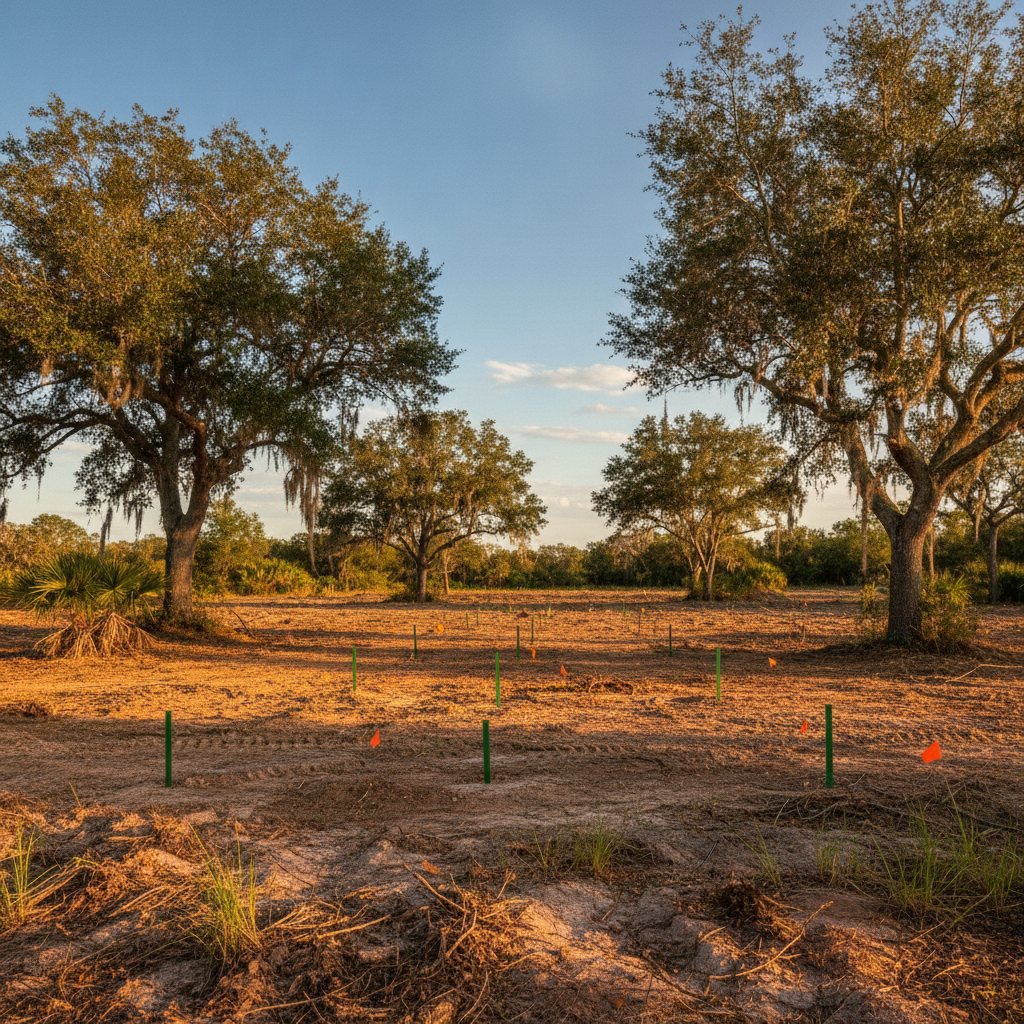
A landlocked parcel with no recorded legal access is nearly impossible to build on or finance. A current survey shows boundaries, easements, and how you actually reach the lot. Don’t rely on a dirt path that crosses a neighbor’s land.
Much of Central Florida is low and wet. A flood-zone designation or protected wetlands can shrink your buildable area dramatically. An environmental check and a soil test tell you whether the lot will support a foundation and septic before you spend on plans.
I’ve watched buyers fall for a pretty five acres, then learn three of them are wetlands they can’t touch. We check that first — it changes the whole price. — Mourad Elbanna
Land loans differ from mortgages: expect higher down payments (often 20–35%) and shorter terms, since lenders see raw land as riskier. Then budget impact fees — one-time county charges for new construction that can add thousands per home. We help you line up land-experienced lenders and price the full cost of building. Browse current land and lots for sale to start.
Verify zoning and allowed use, utility availability (or well/septic), legal road access, wetlands and flood designation, and impact fees. Doing this due diligence first prevents buying a parcel you can’t build on.
Yes, but land loans differ from mortgages — expect higher down payments (often 20–35%) and shorter terms because lenders view raw land as riskier. We can connect you with lenders experienced in land.
Confirm zoning, that utilities or well/septic are feasible, that there’s legal access, and that wetlands or flood zones don’t consume the lot. A survey and an environmental check answer most of it.
One-time fees a county charges on new construction to fund roads, schools, and services. They vary by county and can add several thousand dollars per home, so factor them into your build budget.
Growth corridors in Polk, Lake, and east Orange counties — areas like Davenport, Groveland, and Christmas — have the most lots and acreage. Ask Lina for current land listings by area.
Yes — we market lots, acreage, and development parcels to the right buyers and help sellers position raw land for the best price.
Tell Lina what you want in plain language and she searches the live Stellar MLS, answers questions, and lines up showings — a licensed agent closes your deal.
Tell Lina your use and budget — Mourad helps you check zoning, access, and utilities before you commit.
Chat with Lina (AI)